
-
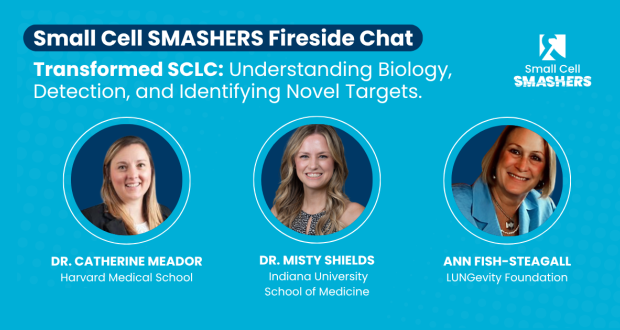
Small Cell SMASHERS Fireside Chat with Dr. Catherine Meador
In April, we were joined by Catherine Meador, MD, PhD, assistant professor of medicine at Harvard Medical School. Dr. Meador discussed Transformed SCLC: Understanding Biology, Detection, and...
IN THE SPOTLIGHT
-
Clinical Trial Access Isn’t Expanding. It’s Concentrating.
Clinical trials show us whether a new treatment is safe and effective. They are also an important way for patients to access cutting-edge care. For trials to truly serve the lung... -
Podcast: Lung Cancer Diagnosis—What Happens Next
What happens after a lung cancer diagnosis? In this first episode of LUNGevity’s Lung Cancer Voices of Hope podcast, lung cancer survivor Lisa Bistline shares her experience, from... -
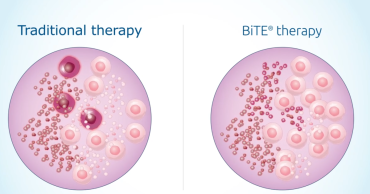
Explaining BiTE® Therapy
A bi-specific T-cell engager (BiTE®) is a new type of engineered molecule used for the treatment of cancer. These molecules harness and activate T-cells, which are involved in the... -
Podcast: Why Community Matters in Lung Cancer Care
Why does finding community matter in lung cancer care? In this episode, lung cancer survivor and advocate Jill Feldman shares her experience, from losing multiple family members to... -
Small Cell SMASHERS Fireside Chat: Who's Up Next?
Small Cell SMASHERS Fireside Chat with Dr. Simon Heeke Join us for a YouTube Live on Friday, May 15, with Simon Heeke, PhD, MD Anderson Cancer Center. Dr. Heeke will discuss... -
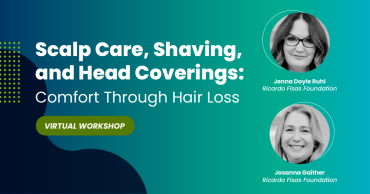
Scalp Care, Shaving, and Head Coverings: Comfort Through Hair Loss
This video is a recording from a LUNGevity virtual meetup. Each month, we host multiple virtual meetups for those impacted by lung cancer to meet and connect with others who... -
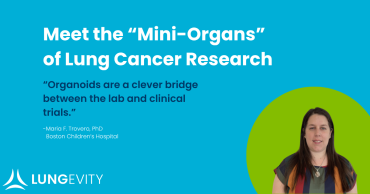
Meet The “Mini-Organs” of Lung Cancer Research
Though many of us would like to deny it, our neighbors affect us. Their loud music disturbs our sleep. The scent of their dinner wafts through an open window. The sight of their... -
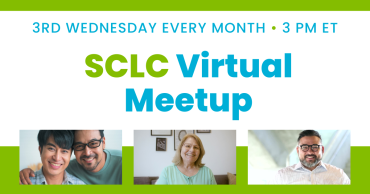
SCLC Virtual Meetup
SCLC patients/survivors - Join us the 3rd Wednesday of every month to c onnect with others who share common experiences and build your community. Register in advance for this... -
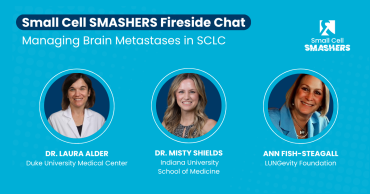
Small Cell SMASHERS Fireside Chat with Dr. Laura Alder
In March, we were joined by Laura Alder, MD, assistant professor of medicine in the Division of Medical Oncology at Duke University Medical Center, to discuss the topic of managing...
TCE TALK 巅峰对话|吴一龙 & Luis Paz-Ares 中外论道:塔拉妥单抗破局SCLC,开启定向免疫新纪元_肺癌_塔拉妥单抗_医脉通
US Phase III Lagoon Trial Results For Zepzelca In Small Cell Lung Cancer
Zepzelca Fails to Meet Main Goal of Phase III Lagoon Trial in Second-Line Small Cell Lung Cancer
Zepzelca Fails to Meet Main Goal of Phase III Lagoon Trial in Second-Line Small Cell Lung Cancer
Lurbinectedin Misses Survival Endpoint in Relapsed SCLC Trial
Topline LAGOON Results Show Missed OS End Point With Lurbinectedin in Relapsed SCLC
Jazz Pharma's Zepzelca Misses Primary Endpoint in Second-Line Lung-Cancer Trial
Jazz Pharmaceuticals Reveals Phase 3 Trial Results for Zepzelca in Small Cell Lung Cancer, Missing Survival Endpoint
Jazz Pharmaceuticals Reveals Phase 3 Trial Results for Zepzelca in Small Cell Lung Cancer, Missing Survival Endpoint
Jazz Pharmaceuticals Provides Update on Zepzelca® (lurbinectedin) Phase 3 LAGOON Trial in Second-Line Small Cell Lung Cancer
Jazz Pharmaceuticals Provides Update on Zepzelca® (lurbinectedin) Phase 3 LAGOON Trial in Second-Line Small Cell Lung Cancer
Family to cycle 250km in memory of 'devoted dad' who sadly died from cancer
Neuropathy and Lung Cancer: What Patients Need to Know
Neuropathy and Lung Cancer: What Patients Need to Know
LUNGevity offers a variety of virtual support groups called ‘meetups’ where survivors and caregivers impacted by lung cancer connect with others who understand the patient experience. Once a month, we invite an expert to share information on a topic related to life with lung cancer, engage with attendees, and answer questions in real time. In May, we welcomed Aileen Anglin, ACNP-BC, AOCNP, from MD Anderson Cancer Center, to talk about peripheral neuropathy. Peripheral neuropathy…
Precision, Partnership, Purpose: Lung Cancer Highlights from AACR 2026
Precision, Partnership, Purpose: Lung Cancer Highlights from AACR 2026
The American Association for Cancer Research (AACR) Annual Meeting brought together thousands of cancer researchers, clinicians, advocates, and patients in San Diego from April 17–22. This year's theme—“Precision, Partnership, Purpose: Advancing Cancer Science to Save Lives Globally”—set a powerful tone for a meeting that showcased advances across the lung cancer landscape. One message was loud and clear. Science is accelerating, and we are reimagining how healthcare is delivered. From…
Podcast: Making the Most of Your Healthcare Visits
Podcast: Making the Most of Your Healthcare Visits
How do you make the most of your visits with your healthcare team? In this episode, lung cancer survivor Bill Morris shares his experience with lung cancer and how he approaches his healthcare visits now. Oncology nurse practitioner Rasheda Persinger shares her insights after 20 years of working with patients. Hosts Ann and Dr. Shields discuss with Bill and Rasheda what they wish every patient knew, from writing down questions before an appointment to asking about biomarker testing to why…
Small Cell SMASHERS Fireside Chat with Dr. Simon Heeke
Small Cell SMASHERS Fireside Chat with Dr. Simon Heeke
In May, we were joined by Simon Heeke, PhD, MD Anderson Cancer Center. Dr. Heeke discussed biomarker identification and their potential roles in patients impacted by SCLC.Moderated by Misty Shields, MD, PhD, Indiana University School of Medicine, and LUNGevity’s Ann Fish-Steagall, SVP of Patient Services and Health Care Delivery, this monthly virtual series highlights the latest discoveries and breakthroughs for SCLC.
Watch Small Cell SMASHERS Live Sessions from HOPE Summit 2026
Watch Small Cell SMASHERS Live Sessions from HOPE Summit 2026
At HOPE Summit 2026—for the first time ever—we hosted Small Cell SMASHERS Live sessions with Misty Shields, MD, PhD, Indiana University School of Medicine. We recorded these sessions so everyone in the Small Cell Lung Cancer community can access the valuable information shared. Small Cell SMASHERS Live Recorded Sessions Blazing New Trails in SCLC: Exploring Genetics & Biology Deep in the Heart of Research: Texas-Sized SCLC Advances The New Frontier: FDA…
Watch HOPE Summit 2026 Videos
Watch HOPE Summit 2026 Videos
HOPE Summit 2026 was filled with old friends reuniting, new friends being made, and of course, plenty of inspirational and informative sessions designed to help people live well with lung cancer.For the second year in a row, select sessions were recorded so those who could not attend are still able to access the valuable information shared.HOPE Summit 2026 Recorded Sessions Keynote: Wagons Roll with Dr. Ross Camidge Back in the Saddle: Reclaiming Strength and Living Well …
Small Cell SMASHERS Fireside Chat with Dr. Catherine Meador
Small Cell SMASHERS Fireside Chat with Dr. Catherine Meador
In April, we were joined by Catherine Meador, MD, PhD, assistant professor of medicine at Harvard Medical School. Dr. Meador discussed Transformed SCLC: Understanding Biology, Detection, and Identifying Novel Targets. Moderated by Misty Shields, MD, PhD, Indiana University School of Medicine, and LUNGevity’s Ann Fish-Steagall, RN, BSN, SVP of Patient Services and Health Care Delivery, the monthly Small Cell SMASHERS series highlights the latest discoveries and breakthroughs for SCLC.
Clinical Trial Access Isn’t Expanding. It’s Concentrating.
Clinical Trial Access Isn’t Expanding. It’s Concentrating.
Clinical trials show us whether a new treatment is safe and effective. They are also an important way for patients to access cutting-edge care. For trials to truly serve the lung cancer community, the people who enroll in the trials need to represent the populations who are diagnosed in everyday life.Recognizing these needs, federal agencies like the United States Food and Drug Administration (FDA) have been encouraging clinical trials to offer more locations across the US.The PlanThe intention…
Podcast: Why Community Matters in Lung Cancer Care
Podcast: Why Community Matters in Lung Cancer Care
Why does finding community matter in lung cancer care? In this episode, lung cancer survivor and advocate Jill Feldman shares her experience, from losing multiple family members to lung cancer to her own diagnosis, as well as her work building patient communities around the world. She discusses how connecting with others has shaped her journey and why community is important for support, information, and advocacy.Hosts Ann Steagall, RN, BSN, and Misty Shields, MD, PhD, explore with Jill how…
Podcast: Lung Cancer Diagnosis—What Happens Next
Podcast: Lung Cancer Diagnosis—What Happens Next
What happens after a lung cancer diagnosis? In this first episode of LUNGevity’s Lung Cancer Voices of Hope podcast, lung cancer survivor Lisa Bistline shares her experience, from initial scans and biopsies through multiple treatments, and the moment a later biopsy revealed a biomarker that led to a targeted therapy.Hosts Ann Steagall and Misty Shields, MD, PhD, then speak with Anne Chiang, MD, PhD, thoracic oncologist at Yale University, about what patients can expect at their first visit,…
Scalp Care, Shaving, and Head Coverings: Comfort Through Hair Loss
Scalp Care, Shaving, and Head Coverings: Comfort Through Hair Loss
This video is a recording from a LUNGevity virtual meetup. Each month, we host multiple virtual meetups for those impacted by lung cancer to meet and connect with others who understand them and what they’re going through.Periodically, we invite an expert to speak on a topic at the beginning of a meetup, with the second half dedicated to questions and conversation. Visit the online calendar to see our virtual meetups and other upcoming events.For this meetup, we welcomed Jenna Doyle Ruhl and…
Meet The “Mini-Organs” of Lung Cancer Research
Meet The “Mini-Organs” of Lung Cancer Research
Though many of us would like to deny it, our neighbors affect us. Their loud music disturbs our sleep. The scent of their dinner wafts through an open window. The sight of their new puppy brings a smile. We interact with our environment every moment of the day. And so do lung cancer cells. A Brief HistoryTraditionally, we have studied tumor cells in isolation. We often study single cells in a petri dish, or under a microscope, to understand how they work. This has been very important and…
Explaining BiTE® Therapy
Explaining BiTE® Therapy
A bi-specific T-cell engager (BiTE®) is a new type of engineered molecule used for the treatment of cancer. These molecules harness and activate T-cells, which are involved in the body’s immune response, to attack tumor cells. There is currently one FDA-approved BiTE® therapy treatment for targeting small cell lung cancer (SCLC).The video below was created to give you clear, easy-to-understand information about bi-specific T-cell engagers, so you can feel more informed and prepared as you…
Small Cell SMASHERS Fireside Chat with Dr. Laura Alder
Small Cell SMASHERS Fireside Chat with Dr. Laura Alder
In March, we were joined by Laura Alder, MD, assistant professor of medicine in the Division of Medical Oncology at Duke University Medical Center, to discuss the topic of managing brain metastases in SCLC.Moderated by Misty Shields, MD, PhD, Indiana University School of Medicine, and LUNGevity’s Ann Fish-Steagall, RN, BSN, SVP of Patient Services and Health Care Delivery, the monthly Small Cell SMASHERS series highlights the latest discoveries and breakthroughs for SCLC.
Progress in Cancer Care: What the Numbers Tell Us About Lung Cancer
Progress in Cancer Care: What the Numbers Tell Us About Lung Cancer
Every January, the American Cancer Society releases a Cancer Facts & Figures report. It provides a clear view of where we stand in addressing cancer. The 2026 report brings both encouraging news and a sobering reminder that our work is far from over.The Big Picture Shows Real ProgressLet’s start with the good news. We have made significant strides in cancer care over the past three decades. Since 1991, the cancer death rate has dropped by 34%. This translates to approximately 4.8 million…
Artificial Intelligence in Lung Cancer: Hope vs. Hype
Artificial Intelligence in Lung Cancer: Hope vs. Hype
Artificial intelligence (AI) is rapidly reshaping the future of cancer care, but such dramatic innovation also brings important questions.AI has evolved from early consumer tools (like autocorrect on phones, customer service chatbots, and personalized shopping recommendations) to advanced systems with the potential to revolutionize biomedical discovery and patient care. While there is tremendous excitement around AI, there is also a critical need to use it responsibly.Researchers are actively…
Small Cell SMASHERS Fireside Chat with Dr. Eric Singhi
Small Cell SMASHERS Fireside Chat with Dr. Eric Singhi
Eric Singhi, MD, assistant professor, University of Texas MD Anderson Cancer Center, joined us to discuss the role of community and support in people with small cell lung cancer.Moderated by Misty Shields, MD, PhD, IU Health, and LUNGevity’s Ann Fish-Steagall, RN, BSN, SVP of Patient Services and Health Care Delivery, the monthly Small Cell SMASHERS series highlights the latest discoveries and breakthroughs for SCLC.
Why Immunotherapy Isn’t Perfect & How Scientists Are Working to Fix It
Why Immunotherapy Isn’t Perfect & How Scientists Are Working to Fix It
The human immune system is an intricate web of checks and balances that usually excels at detecting and destroying foreign invaders, such as bacteria and viruses, while protecting healthy tissue. But sometimes, the checks and balances get confused and stop the immune system from doing what’s right—such as killing tumor cells. Tumor cells are good at confusing the immune system because they originate from our healthy cells. They can often avoid detection by immune cells. Through several…
New Horizons in Immunotherapy: Lung Cancer Highlights from the 2025 SITC Meeting
New Horizons in Immunotherapy: Lung Cancer Highlights from the 2025 SITC Meeting
The Society for Immunotherapy of Cancer (SITC) celebrated their 40th anniversary at their annual meeting in National Harbor, Maryland from November 5-9, 2025. The meeting focused on multidisciplinary research aiming to leverage the immune system to improve outcomes for cancer patients, including several exciting areas of growth in lung cancer-directed immunotherapy.Tumor Imaging is Growing More Powerful Advanced imaging techniques are poised to change how we understand and treat…
The Future of Lung Cancer Starts Here
The Future of Lung Cancer Starts Here
For more than two decades, LUNGevity Foundation has been a leader in advancing lung cancer research. Since 2002, we have invested $55+ million in more than 200 research projects, helping to build a robust pipeline of discoveries in early detection, treatment innovation, and health equity.Once again, LUNGevity is ready to open our annual grant cycle in 2026 with five research programs designed to address the most pressing challenges in lung cancer care. In addition, these grants ensure the…
Biggest News from Berlin: Research Highlights from ESMO
Biggest News from Berlin: Research Highlights from ESMO
Lung cancer research was in the spotlight at the European Society for Medical Oncology (ESMO) meeting held October 17-21, 2025, in Berlin, Germany. With approximately 30,000 attendees from over 100 countries, this meeting gathered an international audience of clinicians, researchers, patient advocates, and representatives from the healthcare industry to discuss cutting-edge cancer research and share practice-changing clinical trial data. We saw data from studies that aim to build upon…